
What Skipping Winter Prep Actually Costs You
Put off garage door maintenance through another winter and the bill usually comes due at the worst possible moment: a cold snap tightens a spring that was already fatigued from months of humidity and rust, and it snaps while you're trying to leave for work. Or a door that's been dragging on worn rollers finally jumps the track during an ice storm, leaving your garage — and whatever's parked or stored in it — exposed to freezing rain. A spring replacement or emergency service call always costs more than an hour of prevention in the fall. Wilmington doesn't get brutal winters, but the mix of humidity, sudden cold snaps, and heavy rain that defines this area is exactly the combination that wears down garage door hardware faster than people expect.
Cold Snaps Put Real Stress on Springs and Cables
Metal contracts in the cold, and torsion springs that were already stretched thin from summer humidity and daily cycling don't handle that extra tension well. If your springs are more than a few years old, or you've noticed the door feels heavier than it used to, don't wait for the first hard freeze to find out they're near the end of their life. A quick way to check: with the opener disconnected, lift the door halfway by hand. It should stay in place on its own. If it drops or shoots up, the springs are unbalanced and due for attention before cold weather adds more strain.
Cables and pulleys deserve the same look. Rust from months of coastal humidity can weaken cable strands long before they visibly fray, and a cable that lets go under winter tension can cause serious damage to the door and whatever's near it.
Moisture, Rust, and Rot Are a Year-Round Problem That Winter Makes Worse
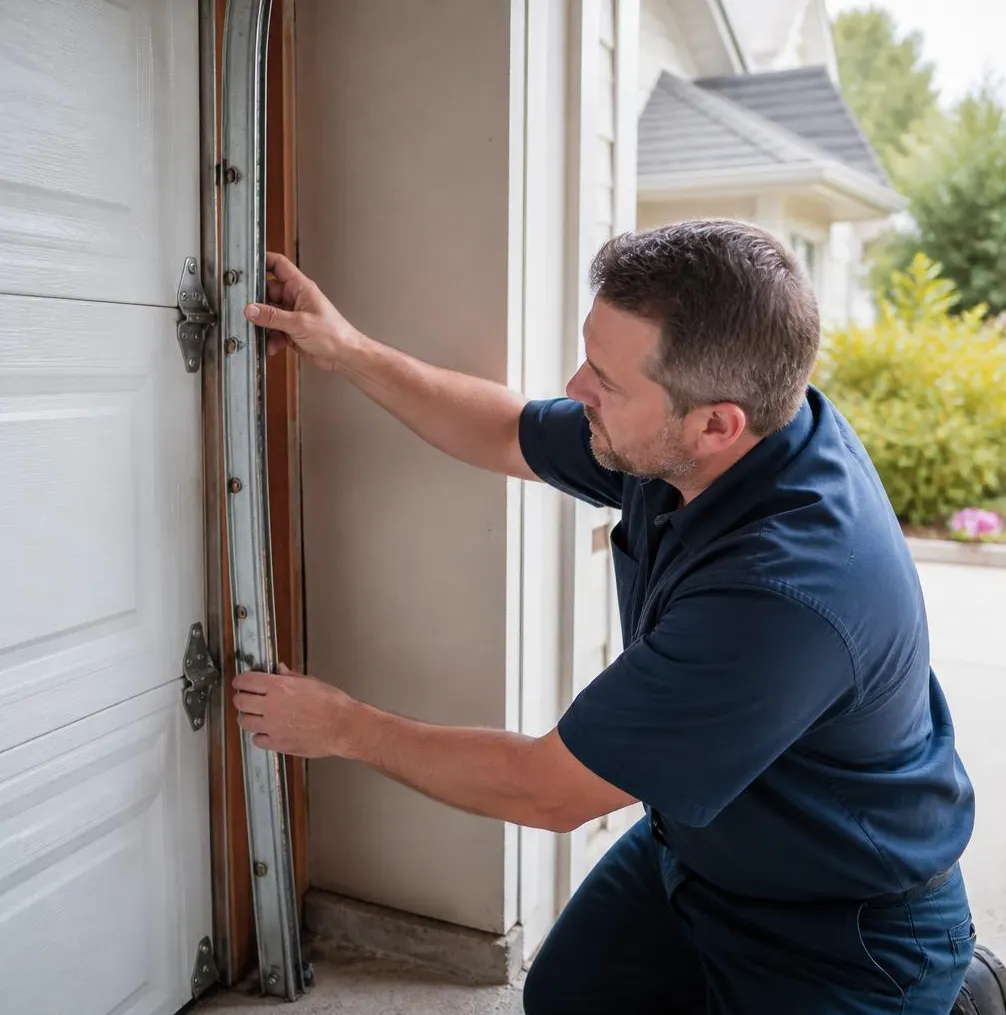
Garages here deal with near-constant moisture from humid summers, heavy rain, and pine debris that holds water against tracks and door panels. Heading into winter, that moisture problem doesn't go away — it just gets colder, which is when rust takes hold fastest on exposed hardware. Walk the full length of both tracks and check hinges, rollers, and the bottom bracket for surface rust or pitting. A light coat of a garage-door-specific lubricant on rollers, hinges, and springs (not WD-40, which attracts dust and grit) will cut friction and slow corrosion through the wetter months.
If your door or frame is wood or wood-trimmed, check for soft spots or discoloration at the bottom corners, where water tends to pool after heavy rain. Wood that's already absorbed moisture is far more likely to warp or rot once temperatures swing between cold nights and mild days, which is a normal pattern here in winter.
Weatherstripping Keeps Cold Air and Rain Out
The rubber seal along the bottom of the door and the strips along the sides and top are your main defense against both drafts and wind-driven rain. Inspect them for cracking, flattening, or gaps where daylight shows through. Worn weatherstripping doesn't just let in cold air — it lets in water during heavy rain, which pools inside the garage and accelerates rust on everything from tools to the door track itself. Replacing weatherstripping is inexpensive and takes less than an hour, and it's one of the highest-value things you can do before the first real cold front arrives.
While you're at the threshold, check the slope of the driveway or pad right outside the door. If water tends to collect there after a storm, that water is sitting against your door seal every time it rains, which shortens its life regardless of the season.
Don't Forget the Opener
Garage door openers can act sluggish in cold weather, especially chain-drive units where the chain has lost lubrication or tension. Before winter sets in:
- Test the auto-reverse safety feature by placing a block of wood in the door's path and confirming it reverses on contact.
- Check the photo-eye sensors near the floor on each side of the track — humidity and condensation can fog or mist these over, causing the door to refuse to close.
- Replace the remote and wall-control batteries now rather than waiting for them to die on a cold morning.
- If you rely on your garage as a workshop or extra living space, consider whether an insulated door panel upgrade is worth it before the colder nights settle in.
A Quick Pre-Winter Checklist
- Lift-test the door by hand to check spring balance.
- Inspect cables and pulleys for rust or fraying.
- Lubricate rollers, hinges, and springs.
- Check and replace worn weatherstripping.
- Clear debris and check drainage at the door threshold.
- Test auto-reverse and clean the photo-eye sensors.
- Replace opener remote and keypad batteries.
When to Call Wilmington Garage Door
If your spring test shows an unbalanced door, if cables look rusted or frayed, or if the opener isn't responding reliably, those aren't jobs to leave until spring. Wilmington Garage Door handles spring replacement and garage door maintenance visits that cover exactly this kind of pre-winter inspection — tightening hardware, checking balance, lubricating moving parts, and catching rust or wear before it turns into a stuck or broken door during the next cold snap or heavy rain event.
If you're in Wilmington, Wrightsville Beach, Carolina Beach, Leland, Hampstead, Porters Neck, Ogden, or Castle Hayne and haven't had your garage door looked at since last winter, now's the time. Call Wilmington Garage Door to get your door ready before the next cold front rolls through.