
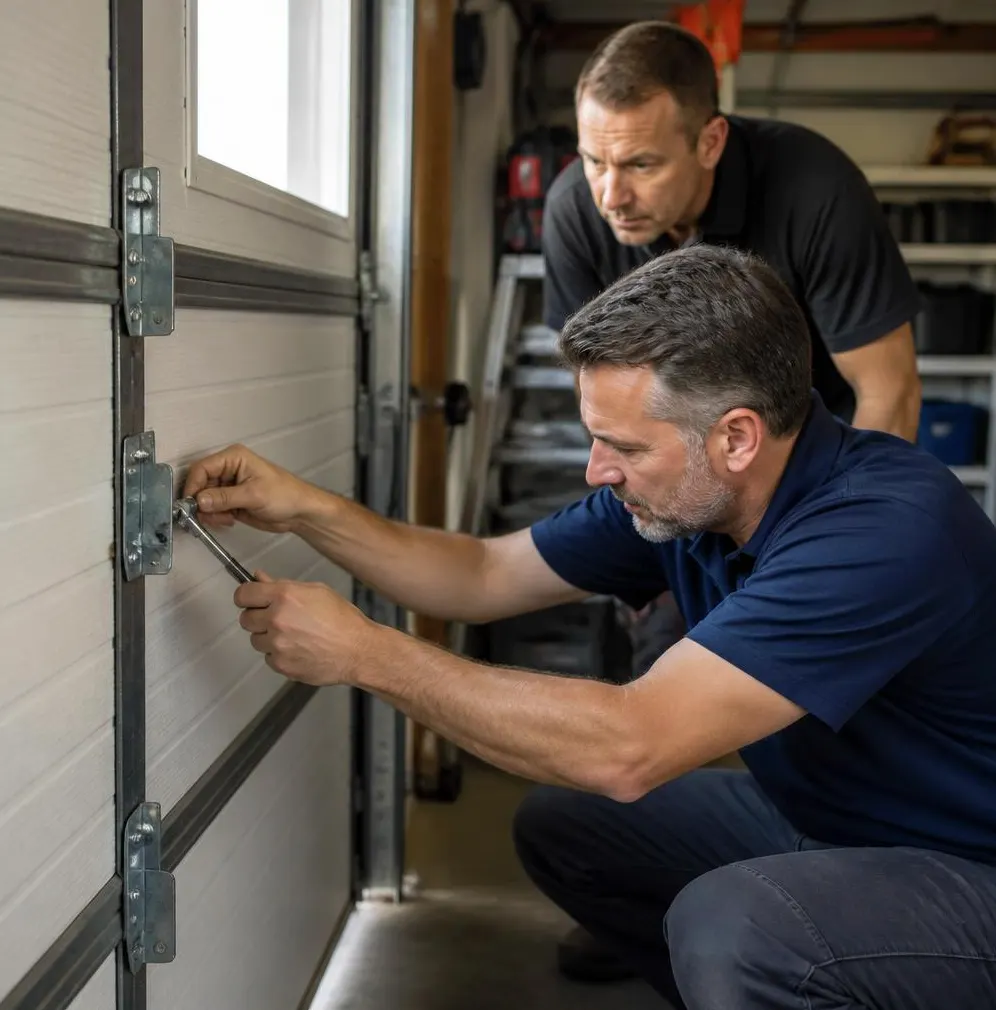
What a Technician Sees on a Storm-Prep Call
Most calls this time of year start the same way: a homeowner noticed the garage door flexing or rattling during a windy afternoon and wants someone to look at it before the next system rolls through. On inspection, it's usually one of a few things—rollers worn from years of humidity and pine debris, a track that's slightly out of alignment, hinges with hairline cracks, or weatherstripping that's shrunk and pulled away from the frame after a summer of heat and heavy rain. None of these are emergencies on a calm day. Under sustained wind pressure, they're exactly what turns a garage door into the first thing that fails.
Why the Garage Door Is a Home's Weakest Wall
A garage door is the largest moving opening in most houses, and it's built to roll up and down, not to resist wind the way a load-bearing wall does. When wind hits the front of a house, pressure pushes in on every surface. The garage door panel is thinner, lighter, and held in place by tracks, rollers, and a handful of hinges and fasteners—not solid framing. If the door buckles or blows in, wind suddenly has a straight path into the garage, and that pressure pushes up and out against the roof and walls from the inside. This is why building codes in wind-prone regions treat garage doors as a structural component, not just an appliance. A door that fails doesn't just mean water and debris in the garage; it can contribute to much larger damage to the rest of the house.
What Makes This Worse Locally
- Humidity and moisture: Constant dampness around garages here softens wood jambs, rusts hardware, and swells wood-composite panels, all of which weaken the points where the door is anchored.
- Pine debris: Needles and sap build up in tracks and around seals, which can cause a door to bind or run unevenly—exactly the kind of stress that shows up under wind load.
- Heavy rain and remnant storm systems: Driving rain finds any gap in weatherstripping or a bowed panel, leading to water intrusion even before the door physically fails.
Signs Your Door Needs Attention Before the Next System
- Visible daylight around the edges of the closed door
- A door that shudders, bows, or flexes noticeably when wind gusts hit it
- Rollers that look flattened, cracked, or rusted
- Hinges with rust streaks or any visible hairline cracks
- Track brackets that are loose or pulled slightly away from the wall
- An opener that struggles or reverses unexpectedly, which can signal spring or balance issues that get worse under added wind pressure
Steps That Actually Help Before Storm Season
1. Check and Reinforce the Track and Rollers
Loose track brackets and worn rollers are the most common failure points under wind load. Tightening bracket bolts and replacing cracked or flat-spotted rollers is inexpensive compared to a full door replacement and significantly improves how the door handles lateral pressure.
2. Inspect Hinges and Panel Seams
Hinges connect the panels and transfer stress across the whole door. Any hinge with visible cracking or heavy rust should be replaced before, not after, a wind event. While you're at it, look at the seams between panels for gaps or separation, which often indicate the door has already been flexing more than it should.
3. Consider a Bracing Kit for Older Doors
If your garage door isn't wind-rated and is more than 10–15 years old, a horizontal bracing kit (generally in the $100–$300 range for materials) can add real rigidity to the panels without replacing the whole door. This is a reasonable middle step for homeowners who aren't ready for a full installation but want more protection than the door currently offers.
4. Replace Worn Weatherstripping
Weatherstripping that's cracked, flattened, or pulling away from the frame lets in wind-driven rain and reduces the seal's ability to keep the door seated firmly in the track. It's a low-cost fix that pays off every time a storm brings sideways rain.
5. Test the Auto-Reverse and Balance
A door that's out of balance puts uneven strain on the opener and the springs, which matters more when wind is pushing against the panel from outside. If the door doesn't reverse properly on contact or feels heavy when moved manually, that imbalance needs to be corrected before storm season, not during it.
When to Call Wilmington Garage Door
If you've noticed any of the warning signs above, or it's simply been a year or more since the door was inspected, it's worth having a technician look at it before the next round of storm remnants moves through. Wilmington Garage Door handles both Garage Door Maintenance visits—checking tracks, rollers, hinges, hardware, and seals—and Garage Door Repair for anything already showing wear, from bent tracks to failing weatherstripping. If a spring is weak or uneven, that's addressed separately through proper spring service, since a door that isn't balanced correctly is harder to keep sealed and stable in high wind. We show up on time, diagnose what's actually happening with the door, and explain the trade-offs between a quick repair and a longer-term upgrade so you can decide what makes sense for your home.
If your garage door has been rattling, sagging, or letting in daylight around the edges, call Wilmington Garage Door today to get it checked and reinforced before the next storm system reaches Wilmington, NC.